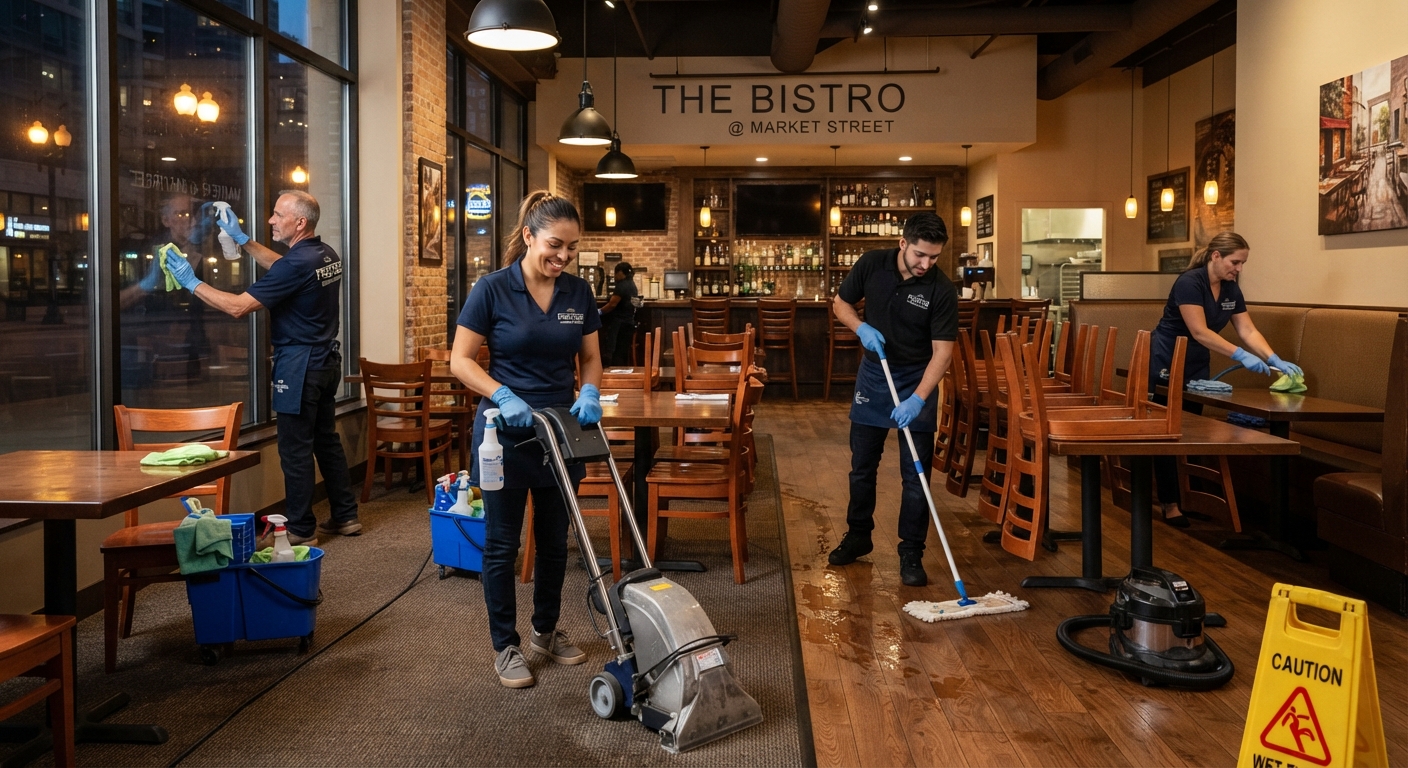
Running a restaurant means keeping up with much more than food preparation and customer service. Kitchens, dining areas, restrooms, floors, equipment, and high-touch surfaces all require regular attention to maintain a clean and welcoming environment.
For restaurants in Port St. Lucie, Fort Pierce, and communities throughout the Treasure Coast, professional commercial cleaning can provide an important layer of support. While daily staff cleaning is essential, deep cleaning helps address buildup and hard-to-reach areas that can easily be overlooked during a busy shift.
A consistent restaurant cleaning program can help reduce grease and grime, maintain cleaner floors and restrooms, improve the appearance of your facility, and help your business stay prepared for routine health and safety inspections.
Why Restaurant Cleaning Requires More Than a Quick Cleanup
Restaurants are busy environments. Food is prepared, customers come and go, employees work throughout the facility, and spills and messes can happen throughout the day.
Daily cleaning helps keep up with the obvious tasks, but some areas need more detailed attention. Grease can accumulate around kitchen surfaces, food particles can collect in corners and hard-to-reach spaces, and floors can develop buildup over time.
Professional restaurant cleaning services can help address these areas as part of a consistent cleaning program.
The goal isn’t simply to make a restaurant look clean. A thorough cleaning routine can help create a more comfortable environment for employees and customers while supporting the overall cleanliness of the facility.
What Is Restaurant Deep Cleaning?
Restaurant deep cleaning goes beyond the basic cleaning performed during or after a typical shift.
Depending on the facility and its needs, deep cleaning may include detailed attention to:
- Kitchen floors and hard-to-reach areas
- Grease and food buildup
- Baseboards and corners
- Dining areas and high-traffic surfaces
- Restrooms and frequently touched fixtures
- Entryways and common areas
- Tile and grout
- Doors, handles, and other high-touch surfaces
- Areas that may be overlooked during routine cleaning
Every restaurant is different, so cleaning needs will vary. A professional cleaning company can help develop a schedule based on the size of the facility, traffic levels, type of food service, and areas requiring the most attention.
Grease and Food Buildup Can Become a Problem
Grease and food residue are part of everyday restaurant operations, particularly in busy commercial kitchens.
Without regular detailed cleaning, buildup can accumulate on floors, surfaces, corners, and other areas. This can make a facility more difficult to maintain and may affect the overall appearance of the kitchen.
Regular cleaning combined with scheduled deep cleaning helps keep buildup under control rather than allowing it to accumulate over time.
For restaurant owners and managers, consistency is important. Cleaning shouldn’t only happen when an area becomes noticeably dirty.
Don’t Forget the Floors
Restaurant floors experience a tremendous amount of traffic every day.
Employees move between kitchens, dining areas, storage spaces, and other parts of the facility. Customers walk through entrances and dining areas, while spills and food debris can create additional cleaning challenges.
Regular floor cleaning helps remove everyday dirt and debris, while deeper floor care can address accumulated grime and buildup.
CleanPro Services can provide commercial floor cleaning as part of a broader restaurant cleaning program, helping businesses maintain cleaner, more presentable floors throughout their facilities.
Restroom Cleaning Matters to Your Customers
Customers notice restaurant restrooms.
A dining room can look beautiful, but an unclean restroom can quickly affect a customer’s overall impression of the business.
Restrooms should receive consistent attention to floors, sinks, toilets, fixtures, mirrors, doors, and frequently touched surfaces. Regular cleaning helps maintain a more comfortable environment for customers and employees alike.
For restaurants, restroom cleaning shouldn’t be treated as an afterthought. It is an important part of maintaining the overall cleanliness of the customer experience.
Cleaning Can Help You Stay Prepared for Inspections
Health and safety inspections are an important part of operating a food-service business.
While professional cleaning cannot guarantee the outcome of an inspection, maintaining a consistent cleaning program can help your restaurant stay prepared and make cleanliness part of your normal routine rather than something you scramble to address at the last minute.
Restaurant owners and managers should always follow applicable health department, food-safety, and local regulatory requirements for their specific business.
A professional cleaning service can complement those requirements by helping with the ongoing cleaning and maintenance of the facility.
Daily Cleaning and Deep Cleaning Work Together
One of the biggest mistakes businesses can make is treating daily cleaning and deep cleaning as the same thing.
They serve different purposes.
Daily cleaning helps address the everyday mess created by customers, employees, food preparation, and normal restaurant operations. Deep cleaning provides more detailed attention to areas that don’t necessarily need to be cleaned after every shift but still require regular maintenance.
Together, these services can create a more consistent approach to restaurant cleanliness.
A cleaning schedule might include daily, weekly, monthly, or periodic services depending on the restaurant’s needs.
Why Professional Restaurant Cleaning Makes Sense
Restaurant employees already have plenty to manage.
Adding extensive cleaning responsibilities to an already busy staff can make it difficult to maintain consistency, particularly during busy periods.
Professional restaurant cleaning services give business owners another option. A cleaning company can handle scheduled cleaning tasks while restaurant employees remain focused on customers, food preparation, and daily operations.
A customized cleaning plan can also make it easier to identify which areas require daily attention and which areas should be included in a recurring deep-cleaning schedule.
A Cleaner Restaurant Makes a Better First Impression
Cleanliness influences how customers experience a restaurant.
From the moment someone walks through the front door, they are noticing the condition of the space. Clean floors, tables, restrooms, entryways, and dining areas can contribute to a more welcoming environment.
The kitchen may be out of sight for customers, but it still needs consistent cleaning and maintenance.
A professional cleaning routine helps address both the areas customers see and the areas they don’t.
Restaurant Cleaning Services Throughout the Treasure Coast
CleanPro Services provides professional restaurant cleaning services throughout the Treasure Coast, including Port St. Lucie and Fort Pierce.
We understand that every restaurant has different cleaning needs, schedules, and operational demands. From kitchens and dining areas to restrooms, floors, entryways, and other high-traffic spaces, a customized commercial cleaning program can help keep your restaurant looking cleaner and operating in a more comfortable environment.
Whether you operate a restaurant in Port St. Lucie, Fort Pierce, Stuart, Jensen Beach, Vero Beach, or another Treasure Coast community, CleanPro Services can develop a cleaning plan around your facility and schedule.
Keep Your Restaurant Cleaner and Inspection-Ready
A clean restaurant doesn’t happen by accident. It takes consistency, attention to detail, and a cleaning plan that addresses both everyday needs and the areas that require deeper attention.
From routine commercial cleaning to scheduled deep cleaning, CleanPro Services helps restaurants throughout the Treasure Coast, including Port St. Lucie and Fort Pierce, maintain cleaner and more welcoming facilities.
If your restaurant needs a dependable cleaning program, contact CleanPro Services to discuss your facility, schedule, and cleaning needs.